
Creativity as Pathway to the Authentic Self
I believe there is within each of us an urge to create — to bring something into existence that has never been seen or expressed in quite that way before. This urge is not frivolous. It is a deep human need to make meaning, to express what cannot be said, to witness ourselves into being.
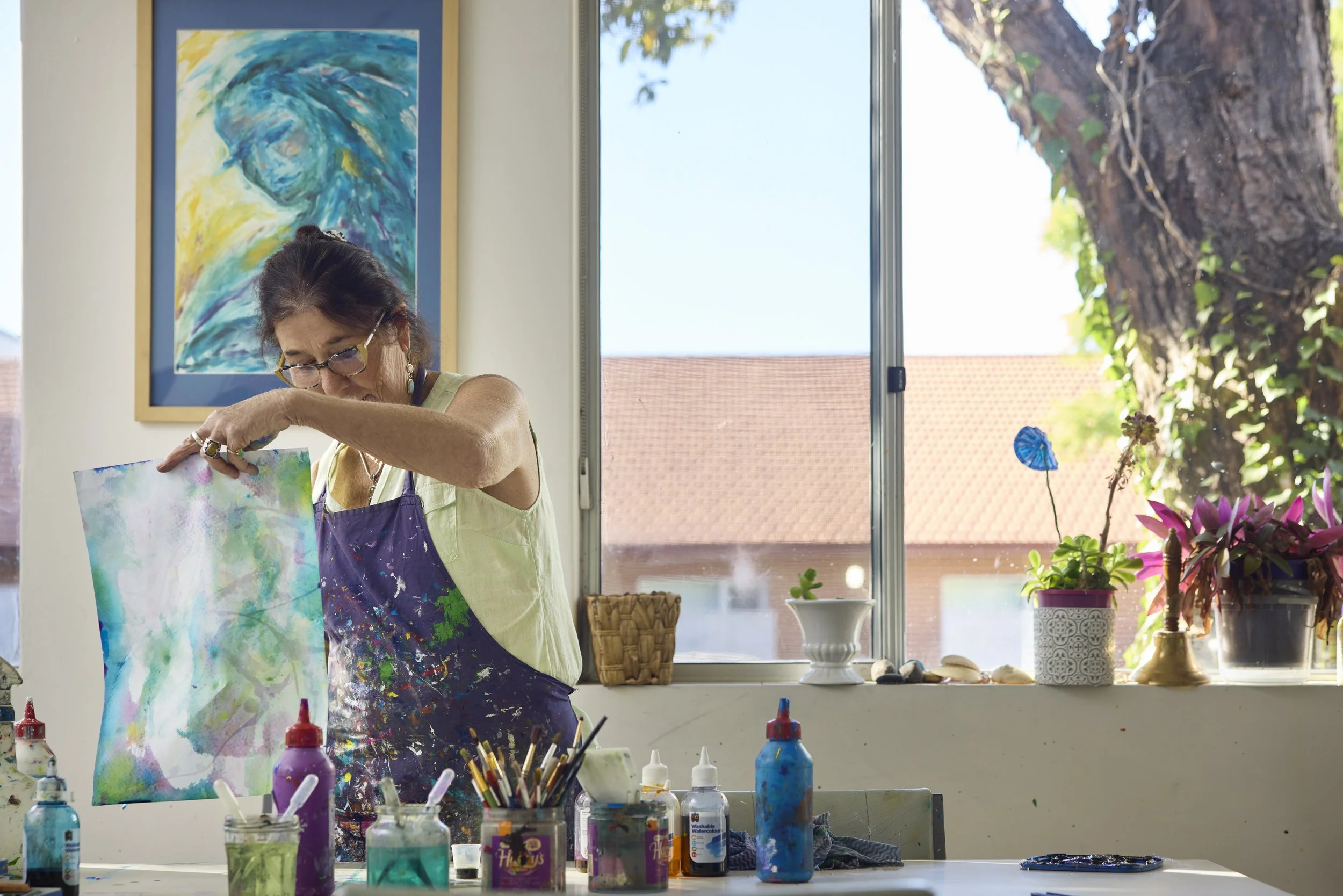
For me, creativity is more than making something beautiful. It can be a way of discovering something within ourselves that we may not reach through words alone. Sometimes we create from somewhere deep within us — becoming a conduit for something we don't yet understand. We experiment, surrender and allow the process to unfold. In those moments, we are not making art — we are making ourselves.
Art Offers Another Language
Words are not always enough. They are bound by logic, by what we think we know, by the need to explain and justify.
An image can emerge before we understand what it is saying. Making something visible can offer another perspective and sometimes open a door into experience that words have kept locked. The image does not need permission. It does not ask for understanding. It simply appears — and in appearing, it reveals.
The image can open a door.
Mindfulness Through Making
Mindfulness is often framed as a practice of sitting still and observing the mind. But there is another form of mindfulness — one born not from stillness but from complete absorption.
When we become absorbed in the movement of a pencil, the sweep of colour, the texture of a material or the rhythm of a brush, our attention comes into the present moment with such force that there is no room for anything else. The past, the future, the anxious mind — all of it falls away.
In those moments, making becomes a form of meditation. The meditation that happens not through doing less, but through doing one thing so fully that we disappear into it.
Freedom of Spontaneous Creation
In most of life, we are asked to get it right. To plan, to execute, to meet expectations. We learn early to imagine the endpoint and work toward it, to avoid mistakes, to present a finished self to the world.
But in the creative process, there is no "right." A mark leads to another mark. A colour changes. Something unexpected happens. We can alter it, cover it, transform it or begin again. There are no mistakes — only choices, only emergence.
This freedom can awaken something in us that has been sleeping. Curiosity returns. Playfulness emerges. We remember the simple, profound pleasure of discovering: "I made that."
Colour, Music and the Senses
We are sensory beings, yet much of modern life asks us to live in our heads — in thought, in analysis, in words.
Colour can influence mood and awaken memories and feelings we didn't know we were carrying. Music can carry emotion and create spaciousness within the creative process — it can hold what words cannot. The tactile qualities of materials — the weight of a pencil, the slip of watercolour, the resistance of clay — invite us to experience rather than simply think.
Creativity is sensory. It is something we do, not simply something we understand. And when we remember that, we remember we are alive.
Symbolism and Metaphor
Symbols are the language of the soul. They allow us to communicate in ways that don't depend upon literal explanation. A door. A tree. A journey. A bird. A circle. A landscape. A colour, a shape, a gesture.
These carry deeply personal meanings — different for each person, different at different times in a life. What a door means to you today may mean something entirely different a year from now.
I don't tell people what their images mean. The image belongs to the person who created it, and the meaning unfolds in their own time, in their own way. My role is simply to create the space where they can explore what that meaning might be.
Creative Writing and Reflection
Sometimes an image leads to words. Sometimes words lead back to an image. Sometimes the image is complete in itself, and words come only later — or never.
Writing can offer another perspective and create space for reflection, self-compassion, self-worth and possibility. Poetry, fragments, stories and spontaneous writing can all become part of the creative process. The words don't need to be perfect or profound — they need only to be honest.
Nature as Teacher
Nature teaches me constantly. The changing seasons show us that nothing remains the same. Winter passes. A tree stands bare and then slowly, impossibly, becomes green again. We cannot hurry this process; it unfolds in its own time.
Growth cannot always be rushed. Stillness has its own purpose. Letting go is as important as holding on. Everything that is born must eventually die, and from that ending comes new beginning.
Nature invites us to notice these truths. It calls us to allow, to witness, to be present to mystery — not to solve it or explain it, but simply to stand in its presence and be changed by it.
Flow — The Creative State
There are moments when the thinking mind becomes quieter and the creative process seems to take over. We become absorbed. Time changes its shape. The ego steps aside. We are no longer separate from what we are making — we are making and being made simultaneously.
We don't force flow. We cannot will it into being through effort or intention. Instead, we create the conditions in which it might emerge — we slow down, we listen, we allow, we play, we risk. And sometimes, flow arrives.
My Creative Treasure Chest
Over the years I have gathered a rich collection of approaches and possibilities: Art-making, Meditation, Mindfulness, Guided Imagery, Music, Poetry, Creative Writing, Symbolism, Storytelling, Nature, Movement, Ritual.
I don't use these as a formula or a rigid sequence. I draw from them according to the people in the room, the setting and what feels alive in the moment. Some days, a group needs silence and mark-making. Other days, they need music and movement and the permission to play.
The treasure chest is there to serve the group, not to be served by it.
I Create Alongside You
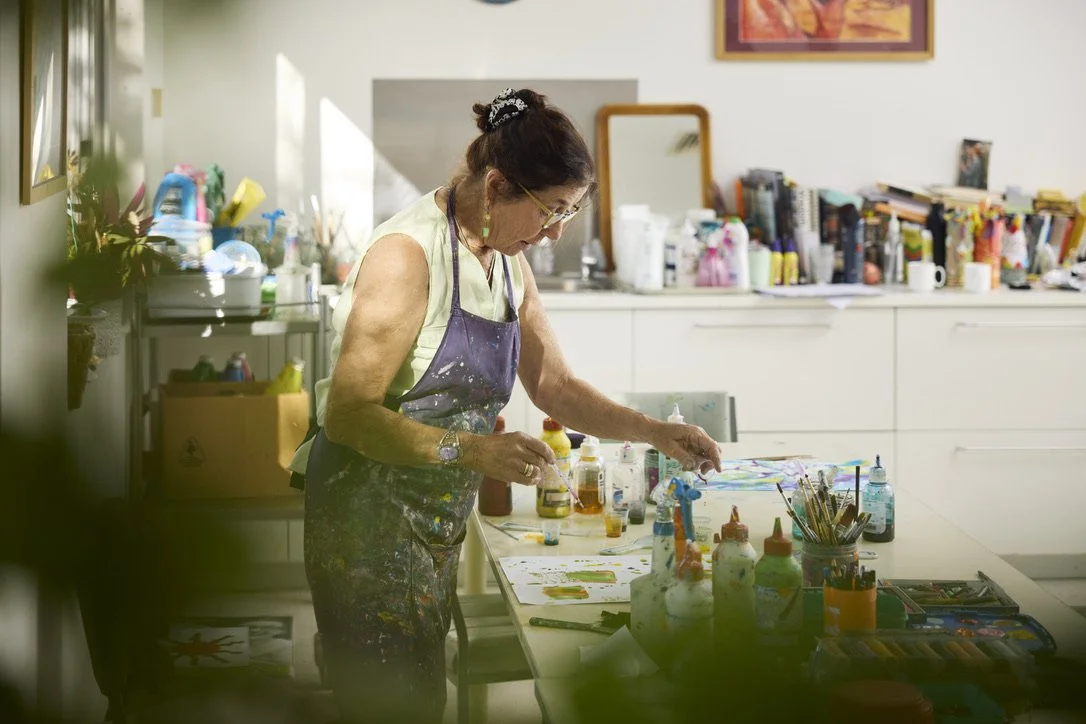
One of the most important aspects of my facilitation is that I make art too. I don't stand outside the group as the person who knows what should happen, or as the expert observing from a distance.
I draw. I paint. I write. I experiment. I sometimes don't know what I'm doing next. I take risks. I allow myself to be surprised by what emerges.
I do this deliberately. When people see their facilitator also in the creative process — not performing, not demonstrating technique, but genuinely creating — something shifts. The permission to explore, to not know, to let the process unfold becomes real. It is no longer a theory. It is happening right here, in this room, with this person.
I model curiosity, play and a willingness to take a creative risk. Because creativity isn't about getting it right. It is about discovering what becomes possible when we begin.
Creating Space for Something New
Sometimes what emerges from the creative process is a new image. Sometimes it is a new way of seeing something familiar. Sometimes it is simply a feeling of having reconnected with a part of yourself that had become quiet beneath the demands of everyday life.
Creativity can open a space for joy, possibility, meaning, curiosity, connection and renewal. It can remind us of truths we forgot: I am not stuck. Something can change. There is more to me than I remember.
Creativity doesn't always tell us where we are going. Sometimes it simply helps us take the next step. And sometimes, that is enough.
A Working Artist
I am not just a facilitator who talks about creativity. I am a working artist and designer. My textile work has been recognised internationally — most recently as 'Best Studio Artist Design' at the Domotex Carpet Design Awards in Germany (2024).
I keep this creative practice alive deliberately. Because I need to stay grounded in the actual process of creation — the uncertainty, the joy, the risk, the discovery, the not-knowing. I need to know what it feels like to make something and not be sure where it's going. I need to experience the liberation of the creative process in my own hands.
This ongoing practice keeps my facilitation honest. I don't stand at a distance telling you about creativity. I live it. I know what I'm asking you to do, because I do it too. I know how it feels.
Sometimes the next step is simply to begin. If you would like to experience this way of creating, I would love to hear from you.